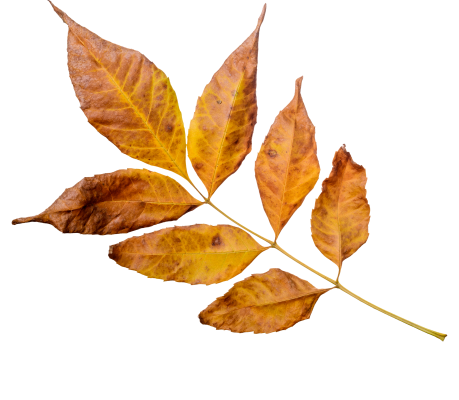
What if you’re not losing your motivation? What if you’re entering a Season of life that’s asking you to be motivated by something entirely different?

As we move beyond Thanksgiving and into the final weeks of the year, I’ve been thinking about gratitude. Not just gratitude for the people we love, the experiences we’ve enjoyed, or the blessings we’ve received, but gratitude for ourselves.
How often do we pause to appreciate the ways we’ve shown up in our own lives?
The challenges we’ve navigated. The difficult decisions we’ve made. The growth we’ve experienced. The ways we’ve learned to care for ourselves.
Especially as women, we can be so accustomed to focusing on everything that still needs our attention that we overlook how much we’ve already done.
That’s why I’ve created a free resource called You Did More Than You Think: Free Self-Gratitude Prompts to Close Your Year.
It’s an invitation to honor how you’ve shown up for yourself this year and practice self-acknowledgment without turning reflection into another performance.
You can enjoy the prompts on your own, share them during holiday gatherings, or explore them with friends and family. There’s no prescribed schedule. You can do them all at once, one at a time, or in whatever way feels joyful and regenerative.
You can print the guide to write by hand or type directly into your lifetime-access editable Google Drive document.
And I think this practice of self-gratitude is particularly meaningful when we consider the wisdom of autumn.
Because before we begin asking what needs to change, perhaps we need to appreciate the woman who’s brought us this far.
What If You’re Not Losing Motivation, but Changing Motivation?
I’ve been reflecting on something that comes up often in my coaching work.
A woman who’s spent decades being incredibly capable suddenly finds herself struggling with things she used to manage relatively easily.
She’s built a career or business. She’s cared for people. She’s managed responsibilities, solved problems, and figured things out.
She’s the woman who knows how to get things done.
But now she’s feeling scattered.
She’s dropping balls.
She’s having trouble motivating herself.
And she’s wondering:
What’s wrong with me?
Why can’t I keep up the way I used to?
Do I need a better organizational system? Is it my hormones? ADHD? Burnout?
These are all reasonable questions.
Neurodivergence, perimenopause, chronic stress, sleep deprivation, health conditions, and genuine overload can absolutely affect our energy and executive functioning. They deserve appropriate attention and support.
But there’s another possibility I think we sometimes overlook.
What if some of the things we’re struggling to motivate ourselves to do simply don’t belong in the season of life we’re living anymore?
What if we’re still trying to operate according to the priorities, expectations, and motivations of an earlier version of ourselves?
And what if the difficulty we’re experiencing isn’t always evidence that something is wrong?
What if it’s an invitation to listen?
The Troll at the Bridge: Remembering the Bigger Quest
I often think of life as a great quest.
An adventure filled with discovery, relationships, beauty, opportunities, and unexpected challenges.
Imagine you’re walking through the woods on your great quest. You’re enjoying the scenery, feeling connected to your purpose, and suddenly you encounter an unpleasant troll standing at a bridge.
The troll demands something before allowing you to pass.
And you’re thinking, Why is this troll here? I was having such a lovely walk!
Isn’t that how life can feel?
An unexpected responsibility. A conflict at work. A health concern. A relationship challenge. A financial problem.
Suddenly, all our attention goes toward the troll.
How do I get around this?
How do I solve this problem?
How do I make it go away?
But what happens when we become so focused on the obstacle that we forget the larger adventure?
Sometimes the most loving thing we can do is zoom out.
Before we decide how to cross the bridge, perhaps we need to remember where we’re going—and where we are.
Not every obstacle is meaningful or beneficial. Sometimes a troll is just a troll.
But remembering the larger quest can help us recognize whether an obstacle is asking us to develop a skill, seek support, set a boundary, change direction, or reconsider whether we need to cross that particular bridge at all.
Spirit Before Strategy: You Have to Know Where You Are
Think about opening Google Maps.
You enter your destination, but the app also needs your current location.
Without knowing where you are, it can’t guide you toward where you want to go.
I think we forget this when navigating our lives.
We’re so focused on the destination, the goal, or the problem we’re trying to solve that we don’t always pause to orient ourselves.
Where am I emotionally?
Physically?
Spiritually?
Developmentally?
Seasonally?
What is this season of life asking of me?
What is available to me now?
What am I ready to release?
What does my intuition have to say?
What does Love have to say?
Sometimes we need to orient to spirit before we orient to strategy.
Because the strategies that worked beautifully during one season of life may not be appropriate for the season we’re living now.
And nature offers us a powerful reminder of this.
Autumn Is Not a Failed Summer
In the Wheel of the Year, Samhain marks the third and final harvest festival.
For our ancestors living in agricultural communities in colder climates, the transition into late autumn wasn’t optional.
The growing season was ending.
The harvest had been gathered.
And the work changed.
It was time to sift and sort, preserve what had been harvested, prepare for winter, and make wise decisions about what could be sustained.
What do we have?
What is enough?
What needs to be preserved?
What can be shared?
What seeds will we save for spring?
What needs to be released?
These are very different questions from those of spring and summer.
Spring invites us to plant and begin.
Summer invites us to nurture and sustain.
Autumn invites us to harvest, discern, and prepare.
Winter invites us to rest, replenish, and turn inward.
Yet our modern culture often expects us to live as though it’s summer all year long.
Keep producing.
Keep growing.
Keep achieving.
Keep expanding.
And when our energy shifts, we interpret it as failure.
But the tree isn’t failing because its leaves are falling.
The earth isn’t broken because it stops producing the same way it did in July.
Autumn isn’t asking us to keep producing as though it’s still summer. It’s asking us to become wise stewards of what we’ve already created.
What if we allowed ourselves to do the same?
The Four Feminine Archetypes and the Seasons of Our Lives
One of my favorite ways to explore cyclical living is through the four feminine archetypes: Maiden, Mother, Enchantress or Sorceress, and Crone.
These archetypes aren’t rigid rules or identities we must adopt. They’re symbolic energies that can help us understand different phases of our lives.
Spring: The Maiden
The Maiden represents emergence, curiosity, exploration, and possibility.
She’s discovering who she is and what she wants.
Her questions are:
Who am I? What do I want? What is possible for me?
Summer: The Mother
The Mother represents nurturing, building, sustaining, and tending.
This archetype isn’t limited to literal motherhood.
She might be nurturing children, relationships, a business, a career, a home, or a community.
She’s devoted to caring for what she’s created.
For many women, much of the first half of life is spent in this outward-facing energy.
We’re building, achieving, providing, and holding things together.
And there’s tremendous beauty in that.
Autumn: The Enchantress, Sorceress, or Sovereign Woman
Then comes autumn.
The woman who’s spent so much of her life directing her energy outward begins turning inward.
She starts asking different questions.
What do I want now?
What matters to me?
What have I outgrown?
What am I no longer willing to participate in?
What do I want the next chapter of my life to look like?
Some archetypal traditions associate this season with the Virgin, understood symbolically as a woman who belongs to herself.
A sovereign woman.
I sometimes think of this archetype as Maiden 2.0.
Because there’s a return to curiosity, desire, and possibility.
But this time, we’re not returning as the women we were in spring.
We’re returning with the wisdom of everything we’ve lived.
We’ve loved, lost, built, succeeded, failed, learned, and grown.
And now we get to ask those Maiden questions again with an entirely different level of self-knowledge.
Winter: The Crone
The Crone represents wisdom, perspective, discernment, and acceptance.
She understands that everything has its season.
She knows that endings aren’t necessarily failures.
And she recognizes that her worth isn’t dependent on what she produces.
These energies aren’t confined to particular ages. We can experience all four throughout our lives.
But the transition into the autumn archetype can be especially powerful during midlife.
Because it invites us to release our identification with the woman we’ve been and make room for the woman we’re becoming.
The Luteal Phase as a Monthly Mirror of Autumn
If you’re still menstruating, you may recognize these seasonal energies within your monthly cycle.
In a cyclical-living framework, menstruation corresponds symbolically with winter, the follicular phase with spring, ovulation with summer, and the luteal phase with autumn.
After ovulation, progesterone rises and estrogen fluctuates.
Some women notice changes in energy, mood, stress sensitivity, or tolerance for demands during the luteal phase.
These experiences vary considerably, and severe premenstrual symptoms deserve appropriate medical care.
But there’s an interesting symbolic opportunity here.
Sometimes the things that irritate us during the luteal phase are things that have been bothering us all month long.
We’ve simply been more willing or able to overlook them.
And now, perhaps, we’re less willing to override ourselves.
What if the autumn of our menstrual cycle offers a recurring invitation to practice discernment?
What isn’t working?
What have I been tolerating?
What needs attention?
What do I want to keep?
What am I ready to release?
I see a beautiful parallel between this monthly opportunity and the larger reckoning that can emerge in midlife.
The Great Midlife Reckoning: From Proving Ourselves to Knowing Ourselves
For many of us, the first half of life is oriented toward the external world.
We’re establishing ourselves.
Building careers and businesses.
Creating families and relationships.
Developing skills.
Discovering what we’re capable of.
We’re asking:
What can I accomplish? What can I achieve? What can I build?
And there’s nothing wrong with any of that.
Achievement, ambition, and creation can be wonderful expressions of who we are.
But at some point, many women begin noticing that the rewards that once motivated them don’t have quite the same pull.
More money.
More recognition.
Another accomplishment.
Another credential.
Another gold star.
Another cookie.
And suddenly we’re wondering why we don’t care as much anymore.
We might interpret this as losing our ambition, our discipline, or our edge.
But what if we’re actually experiencing a change in what matters?
What if the first half of life was largely about discovering our power to shape the external world, and the second half is inviting us into a deeper relationship with our inner world?
What am I here to experience?
Who am I here to love?
What brings me joy?
What feels meaningful?
Who am I when I’m not producing or accomplishing something?
This isn’t a universal developmental timetable. Some women discover their greatest professional ambitions in midlife, and others have been deeply inward-facing since childhood.
But for many of us, there is a shift.
From proving ourselves to knowing ourselves.
From building a life that looks successful to inhabiting a life that feels meaningful.
And sometimes that shift brings a reckoning.
Because we look around at everything we’ve built and realize that not all of it belongs to the woman we are now.
Before You Release Anything, Honor Your Harvest
I think this part is incredibly important.
Before we begin talking about what needs to change, we need to appreciate what we’ve created.
Look at your life.
Look at what you’ve built.
What you’ve survived.
What you’ve learned.
The people you’ve loved.
The relationships you’ve nurtured.
The responsibilities you’ve carried.
The risks you’ve taken.
The woman you’ve become.
What a harvest.
And maybe some of those accomplishments came at a cost.
Maybe you motivated yourself through fear, perfectionism, insecurity, or a desire to prove your worth.
We can acknowledge those realities without dismissing everything we’ve accomplished.
We can appreciate what a season gave us while recognizing that we don’t want to live in that season forever.
And this is where self-gratitude becomes especially meaningful.
Because I don’t just want you to appreciate the harvest.
I want you to appreciate the woman who gathered it.
Not only for what she produced, but for how she showed up.
For the times she found courage.
For the times she asked for help.
For the times she learned to care for herself differently.
For the times she made difficult choices.
For the times she didn’t get everything right but continued learning.
You deserve appreciation beyond your productivity.
And that’s the invitation behind my free guide, You Did More Than You Think.
The Destroyer Is Also the Liberator
One of the archetypal energies I associate with autumn is the destroyer.
But I want to offer another word alongside it.
Liberator.
Because sometimes dismantling something is what makes its resources available for something new.
In astrology, I associate some of this energy with Uranus, the planet symbolically connected with disruption, awakening, and liberation.
Imagine you’ve spent years building an elaborate Lego structure.
It’s beautiful.
You’ve invested time, energy, and creativity into it.
But now you want to build something different.
And you don’t have an unlimited supply of Legos.
So you take the structure apart.
The pieces aren’t gone.
They’re simply available for a different creation.
I think that’s a beautiful metaphor for midlife.
We’ve invested our energy in roles, responsibilities, identities, habits, commitments, and expectations.
Some still fit beautifully.
Others may not.
And perhaps we’re spending enormous amounts of energy maintaining structures we don’t actually want to maintain anymore.
That doesn’t mean we need to burn our lives down.
Sometimes liberation looks like renegotiating a responsibility, changing the terms of a relationship, delegating a task, releasing a commitment, or giving ourselves permission to want something different.
The purpose isn’t destruction.
The purpose is to liberate energy for what wants to come next.
Are You Organizing Your Life or Just Organizing Your Stuff?
Around 2014, I became really interested in minimalism.
One question I encountered has stayed with me:
Would I buy this again today?
Imagine looking at something you’ve owned for years.
Maybe it was expensive.
Maybe you once loved it.
Maybe it was perfect for who you were at the time.
But would you choose it again today?
Knowing who you are now?
Knowing what you value now?
Knowing what your life looks like now?
I love applying that question beyond our possessions.
Would I choose this responsibility again today?
Would I commit to this project?
Would I structure my work this way?
Would I agree to these terms?
Would I keep spending my time this way?
Answering no doesn’t automatically mean we need to abandon something. Some commitments deserve care and thoughtful consideration even when our circumstances change.
But the question can reveal where we’re continuing to invest energy simply because we’ve always invested energy there.
And here’s another thing minimalism taught me.
Sometimes we spend an enormous amount of time organizing things we don’t actually need.
We buy beautiful baskets, bins, labels, and drawer dividers.
We spend an entire weekend organizing everything.
And six months later, we’re organizing it all over again.
Sometimes the answer isn’t a better organizational system.
Sometimes it’s having less to organize.
And what if that applies to our lives?
What if we’re trying to become more efficient at managing responsibilities that no longer belong to us?
What if we’re trying to optimize a life that actually needs some discernment?
Instead of asking, How can I get better at managing all of this?
Perhaps we need to ask:
Does all of this still need to be here?
The Hard Choices of Autumn
Autumn is a season of reckoning, and reckoning isn’t always comfortable.
For our ancestors living in colder climates, preparing for winter sometimes involved difficult decisions.
Resources were limited.
Food had to be preserved.
Not every animal could be kept through the winter.
There were real choices about what could be sustained.
I’m not sharing that to romanticize hardship or suggest that we should become ruthless with ourselves or others.
I’m sharing it because discernment requires us to acknowledge limits.
Limits of time.
Limits of energy.
Limits of resources.
Limits of attention.
Sometimes there are things we genuinely value that we simply cannot continue sustaining in the same way.
And sometimes the loving choice is to recognize what can be sustained and what cannot.
Summer asks us to nurture.
Autumn asks us to discern.
Both are gifts.
But they’re different gifts.
What If Some of Your Resistance Is Intelligent?
Let’s return to the woman who’s feeling scattered and overwhelmed.
She’s dropping balls.
Procrastinating.
Struggling to motivate herself.
And her immediate assumption is that something is wrong.
But what if some of her resistance is intelligent?
What if she’s been overriding her own preferences, needs, values, and desires for so long that she’s becoming less willing to cooperate?
Perhaps she used to motivate herself through external rewards.
Recognition.
Approval.
Achievement.
Security.
But those rewards no longer hold the same appeal.
The old carrot doesn’t work anymore.
And maybe that isn’t entirely a problem.
Maybe she’s becoming less willing to overpower herself.
Less willing to ignore her needs.
Less willing to sacrifice her well-being for something that no longer matters.
Maybe you’re not losing your ability to motivate yourself. Maybe you’re losing your willingness to motivate yourself with things that no longer matter.
And if that’s what’s happening, it’s worth listening.
Of course, not every difficulty is a message about misalignment.
Sometimes we deeply want to do something and still struggle because of ADHD, executive dysfunction, hormonal changes, illness, burnout, or exhaustion.
Those realities deserve compassion and appropriate support.
We don’t have to turn every symptom into a spiritual metaphor.
But genuine changes in capacity and evolving priorities can coexist.
We can seek support for what’s happening in our bodies and minds while also asking whether our lives still reflect what matters to us.
When You Can No Longer Overpower Yourself
For years, many of us have been incredibly skilled at overpowering ourselves.
We’re tired, but we keep going.
We’re overwhelmed, but we take on another responsibility.
We’re depleted, but we promise ourselves we’ll rest when everything is finished.
And we become remarkably good at getting ourselves to do things regardless of how we feel about them.
Sometimes perseverance is necessary and meaningful.
Love isn’t always convenient.
Commitment isn’t always comfortable.
And alignment doesn’t mean every task will be enjoyable.
But there’s a difference between willingly doing something difficult in service of what matters to us and repeatedly overpowering ourselves to maintain a life that no longer reflects our values.
Midlife can make that distinction harder to ignore.
The approval doesn’t matter as much.
The achievement doesn’t provide the same satisfaction.
The external rewards don’t feel particularly rewarding.
And suddenly we’re left asking:
If the things that used to motivate me don’t motivate me anymore, what does?
Maybe we’ve spent so many years asking what we can make ourselves do that we haven’t had much opportunity to discover what we genuinely want.
What inspires us.
What feels meaningful.
What makes us feel alive.
What we would choose if we weren’t trying to prove something.
And that can be disorienting, especially if we’ve built our identities around being productive, reliable, capable, and successful.
Who am I if I’m not that woman anymore?
And what if I don’t actually want to be that woman anymore?
Perhaps we’re not becoming less capable.
Perhaps we’re reconsidering the terms under which we offer our energy.
Because our attention is precious.
Our time is precious.
Our lives are precious.
And we’re allowed to become more discerning about how we spend them.
Losing Motivation Versus Changing Motivation
When we say we’ve lost our motivation, it sounds as though motivation is something we’ve misplaced.
Something we need to find and put back where it belongs.
But what motivates us can change.
Think about what mattered to you when you were twenty.
Maybe you wanted financial independence.
Maybe you wanted to prove you could succeed.
Maybe you wanted to build a business, create a family, earn a degree, or establish yourself in the world.
Those motivations may have helped you accomplish wonderful things.
But what happens when you’ve already achieved them?
Do you simply invent another version of the same goal?
Keep raising the bar?
Keep adding more?
Or do you allow yourself to ask whether something different is calling you?
Perhaps what motivates you now is love.
Meaning.
Curiosity.
Beauty.
Connection.
Creativity.
Freedom.
Peace.
Wonder.
The desire to experience your life rather than simply accomplish your way through it.
And that doesn’t necessarily mean becoming less ambitious.
You might become incredibly ambitious about something entirely new.
But the motivation comes from a different place.
You’re no longer trying to prove your worth.
You’re expressing something that matters to you.
Peacekeeping Versus Peacemaking
Sometimes we’ve spent so much of our lives keeping everything functioning that we’ve confused maintaining the status quo with creating peace.
We keep the peace by not rocking the boat.
By not disappointing anyone.
By not asking for something different.
By continuing to do what we’ve always done.
From the outside, everything looks peaceful.
But inside, there may be resentment, exhaustion, or disconnection.
And there’s a difference between keeping the peace and making peace.
Sometimes making peace requires telling the truth.
Having a difficult conversation.
Establishing a boundary.
Renegotiating an arrangement.
Or acknowledging that something we’ve been sustaining isn’t sustainable anymore.
That can be uncomfortable, especially if we’ve spent decades being the person who makes everything work.
But what if the desire to renegotiate our lives isn’t selfish?
What if it’s part of becoming more honest, sovereign, and loving?
Sometimes the most loving thing we can do is stop participating in an arrangement that requires us to abandon ourselves.
Autumn Isn’t Asking You to Stop Living
I want to be clear that autumn and midlife aren’t metaphors for decline.
They don’t mean our best years are behind us.
They don’t mean our creative power is disappearing.
They don’t mean we should stop dreaming, growing, or creating.
Quite the opposite.
Autumn can be an extraordinarily creative season.
But creativity may begin taking different forms.
Think about what happens beneath the surface of the earth during autumn and winter.
Organic matter decomposes.
Nutrients are recycled.
Roots interact with the soil.
Seeds wait for the conditions that will support future growth.
There are important processes happening that we can’t necessarily see.
And perhaps the same is true for us.
Sometimes our most meaningful growth happens in our relationship with ourselves.
Our ability to trust ourselves.
Our willingness to tell the truth.
Our capacity to rest.
Our ability to receive.
Our relationship with God, Love, and our intuition.
Our willingness to experience joy without earning it.
That growth may not look impressive according to the standards we’ve been taught to use.
But it’s still growth.
Maybe the next chapter of your life isn’t asking you to build more of the same. Maybe it’s asking you to grow deeper roots.
Honoring Our Ancestors and the Wisdom of the Thin Veil
Samhain is also associated in many contemporary spiritual traditions with honoring our ancestors and the thinning of the veil between the living and the dead.
I find this especially meaningful in the context of midlife.
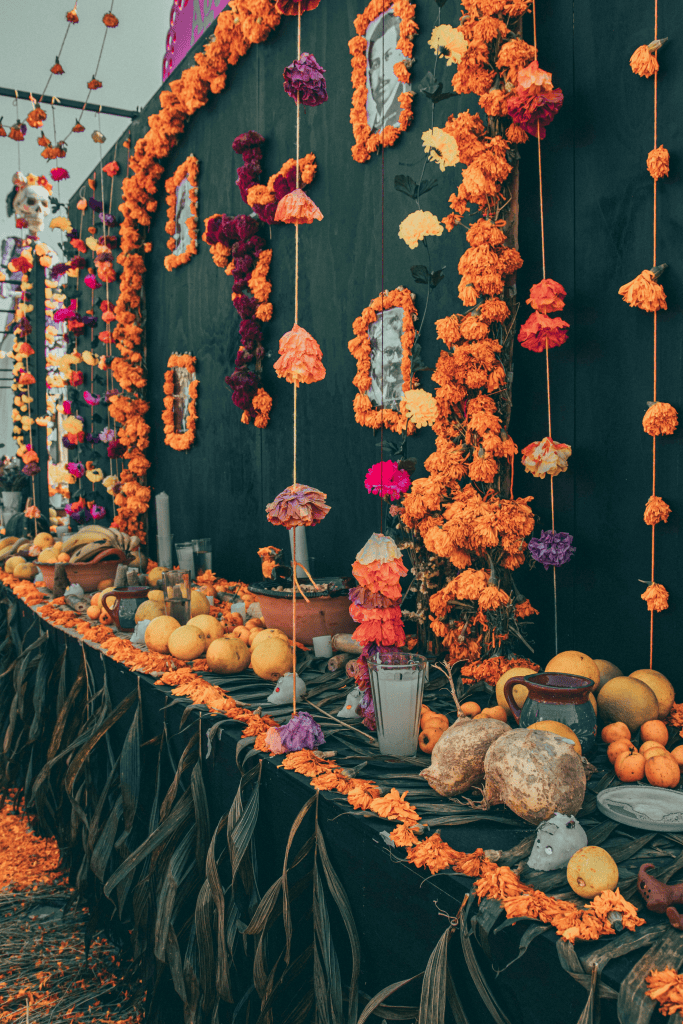
Because as we grow older, we may become more aware that we’re part of something much larger than ourselves.
Part of a lineage.
Part of a story that didn’t begin with us and won’t end with us.
And we begin asking different questions.
What have I inherited?
What patterns have been passed down?
What wisdom do I want to preserve?
What am I ready to release?
What do I want to pass on?
What kind of ancestor do I want to become?
Whether we understand this spiritually or symbolically, the invitation is meaningful.
We’re connected to the earth, the seasons, the people who came before us, and those who will come after us.
We don’t have to know exactly what comes next.
We can listen.
We can receive support.
We can orient ourselves to Love.
And we can trust that not every answer needs to arrive all at once.
Four Questions for Your Own Autumn Reckoning
If you’re recognizing yourself in this conversation, I want to offer four questions to help you explore what this season may be asking of you.
1. What wants to be kept and organized?
Some things absolutely belong in your life.
They deserve your attention, energy, and care.
Perhaps they simply need better systems, clearer boundaries, more support, or a different approach.
Not everything needs to be released.
2. What wants to be released?
What are you carrying that you no longer want or need?
What are you doing simply because you’ve always done it?
What are you maintaining out of guilt or obligation?
What is taking energy you’d rather devote elsewhere?
3. What wants to be renegotiated?
Perhaps you still value the relationship, the work, or the commitment, but the terms need to change.
What responsibilities could be shared differently?
Where might you need support?
What boundaries or conversations would create a more sustainable arrangement?
4. What wants to be reinvented?
If you were creating this part of your life today, knowing what you know now, what would you choose?
What would you do differently?
What new possibilities might become available if you gave yourself permission to imagine something else?
These questions remind us that we’re not necessarily stuck with every structure we’ve created.
We’re allowed to evolve.
Our relationships, responsibilities, work, and dreams are allowed to evolve with us.
Your Next Loving and Inspired Action
After all of this reflection, you might be wondering what you’re actually supposed to do.
And I want to offer something simple.
You don’t need to figure out the entire next chapter of your life.
You don’t need to know exactly where you’re going.
You don’t need a complete plan.
Sometimes you only need to ask:
What is the next loving and inspired action?
Not the next action that proves you’re productive.
Not the next action that makes everyone happy.
Not the next action that maintains everything exactly as it is.
The next loving and inspired action.
Maybe it’s making an appointment.
Having a conversation.
Asking for help.
Canceling a commitment.
Setting a boundary.
Taking a walk.
Spending time in prayer.
Or simply allowing yourself to rest.
Because clarity doesn’t always arrive through force.
Sometimes it emerges when we stop overpowering ourselves long enough to listen.
Autumn doesn’t demand that we know exactly what spring will look like.
It simply invites us to honor the harvest, make wise choices about what we’re carrying forward, and prepare for the season ahead.
And perhaps that’s enough.
A Final Invitation: Honor the Woman You Were, Are, and Are Becoming
If you’re in a season where the things that once motivated you no longer motivate you, I want you to consider that this doesn’t necessarily mean something is wrong.
Maybe you’re changing.
Maybe your values are changing.
Maybe you’ve accomplished what you came to accomplish in one season, and now something else is calling you.
Maybe you’ve spent decades discovering what you can do, and now you’re being invited to discover what you actually want.
The tree doesn’t need to hold onto every leaf.
The land doesn’t need to keep producing indefinitely.
And the harvest doesn’t need to keep growing in order to be valuable.
There is a time for gathering.
A time for honoring.
A time for releasing.
A time for resting.
A time for dreaming.
And a time for beginning again.
You don’t have to reject what you’ve built in order to become someone new.
You can honor it.
Receive its gifts.
Carry forward what matters.
And release the rest.
Maybe the most important question isn’t how to get your old motivation back. Maybe it’s what wants to motivate you now.
Free Self-Gratitude Resource: You Did More Than You Think
As we move through the final weeks of the year, I invite you to extend some of that Thanksgiving gratitude toward yourself.
My free guide, You Did More Than You Think: Free Self-Gratitude Prompts to Close Your Year, creates space to recognize how you’ve shown up for yourself, honor your growth, and practice self-acknowledgment.
Not just gratitude for what you’ve accomplished, but gratitude for who you’ve been.
For the woman you were.
For the woman you are.
And for the woman you’re becoming.
Use the prompts for personal reflection or share them with loved ones during holiday car rides and dinner table conversations. Print the guide to write by hand or type into your lifetime-access editable Google Drive document.
Explore One-on-One Guidance
If you’re navigating your own midlife reckoning, questioning what you want, or recognizing that some parts of your life no longer fit, you don’t have to explore those questions alone.
My one-on-one guidance offers a space to zoom out from the immediate challenges of your life, reconnect with your inner knowing, and discern what Love may be inviting you toward next.
Not because I have the answers to your life.
But because sometimes having someone alongside you who can ask different questions, reflect what you may not yet see, and help you reconnect with your own wisdom makes all the difference.
We can honor what you’ve built, explore what you’re ready to release, and make room for what wants to emerge.
Without turning your life into another self-improvement project.
Because you don’t need another person telling you how to become a better version of yourself.
You deserve support in becoming more fully yourself.
Explore ways to walk together one-on-one.
And wherever you find yourself in the great quest of your life right now, remember:
You don’t have to figure out the entire journey today.
Just the next loving and inspired action.
